Nimi Jātaka
Nimi Jātaka
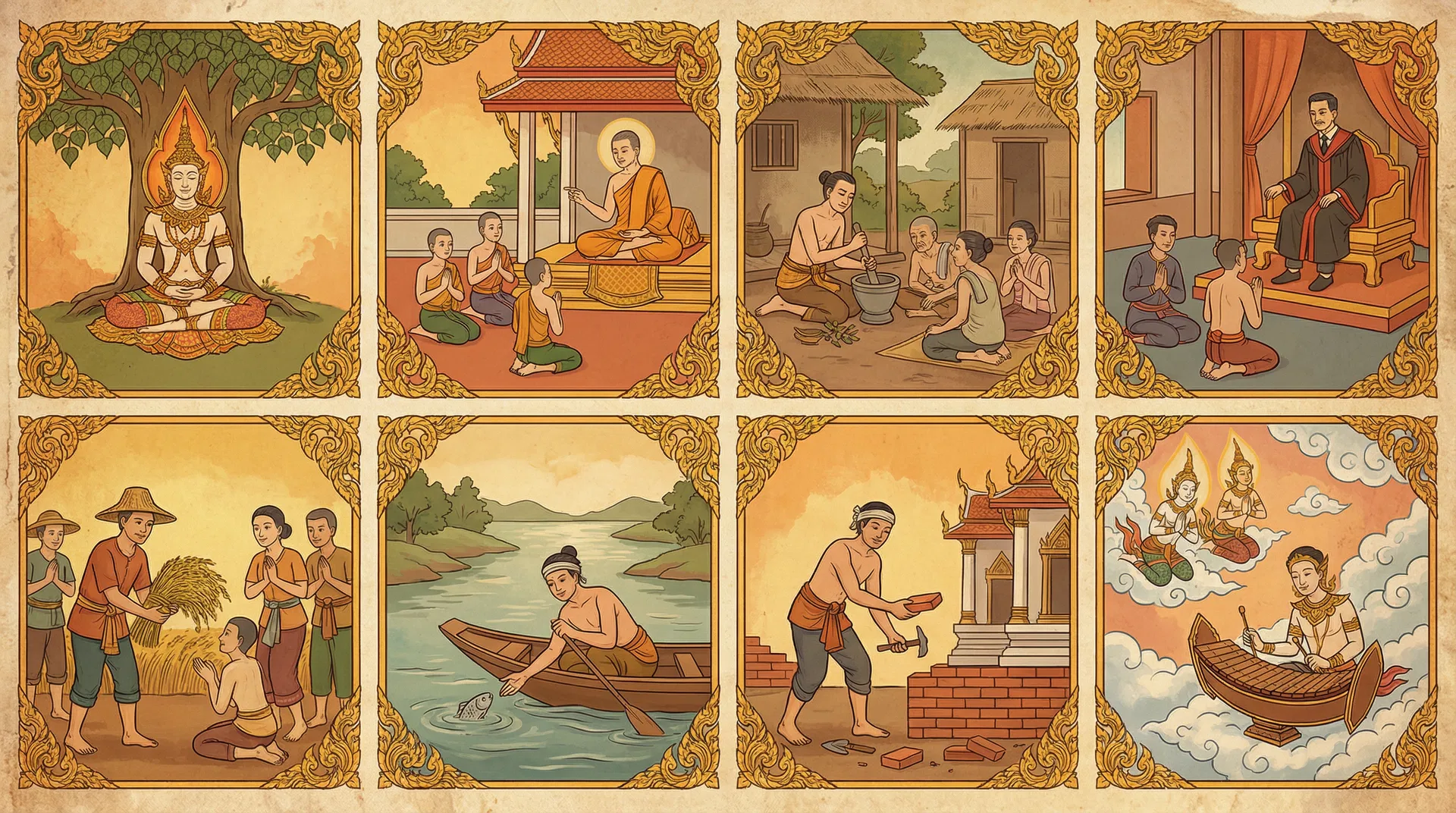
In the prosperous kingdom of Mithila, there once ruled a virtuous king named Nimi. King Nimi was celebrated throughout the land for his unwavering adherence to the ten royal virtues: generosity, morality, renunciation, wisdom, effort, patience, truthfulness, resolve, loving-kindness, and equanimity. He governed his kingdom with a profound sense of justice and a deep commitment to the welfare of his subjects, ensuring that peace and prosperity flourished under his benevolent rule.
One day, a celestial being, a god named Sakka, who resided in the Tavatimsa heaven, observed King Nimi's virtuous deeds from his heavenly abode. Impressed by the king's exceptional righteousness and his dedication to the ten royal virtues, Sakka decided to reward him. He dispatched his divine charioteer, Mātali, to bring King Nimi to the heavenly realm for a brief visit, so that the king might witness the fruits of his virtuous actions.
Mātali descended to the earthly realm in his magnificent celestial chariot, its wheels shimmering with divine light. He arrived at King Nimi's palace and, with great reverence, invited the king to ascend. King Nimi, though surprised, recognized the divine aura of Mātali and the splendor of the chariot. Trusting in the purity of the invitation, he agreed and embarked on a journey to the heavens.
As they soared through the skies, Mātali guided the chariot, pointing out various celestial realms and explaining the causes and effects of different karmic actions. He showed the king the heavenly palaces and gardens, illustrating how virtuous deeds on Earth led to blissful rebirths in such glorious abodes. King Nimi was awestruck by the beauty and splendor of the Tavatimsa heaven, witnessing firsthand the rewards of a life lived virtuously.
During his visit, Sakka, the king of the gods, personally welcomed King Nimi. Sakka explained that the king's virtuous life had earned him a temporary stay in heaven, a reward for his impeccable adherence to the ten royal virtues. However, Sakka also imparted a crucial lesson. He revealed that even the celestial realms were impermanent, subject to the cycle of birth and death, and that true, lasting liberation could only be achieved through the complete eradication of defilements and the attainment of Nirvana.
Sakka then presented King Nimi with a unique opportunity. "King Nimi," Sakka declared, "you have witnessed the fruits of your good karma. Now, I offer you a choice: you may remain here in this heavenly realm, enjoying its pleasures for a time, or you may return to your kingdom with a deeper understanding of the Dhamma and a renewed commitment to cultivating the path to ultimate liberation. Consider carefully, for each choice carries its own consequences."
King Nimi, though tempted by the celestial pleasures, reflected deeply on Sakka's words. He had seen the impermanence of even the highest heavens. He realized that true happiness was not found in temporary bliss, but in the permanent peace of liberation from the cycle of suffering. His purpose on Earth was not merely to enjoy the rewards of his past deeds, but to continue cultivating the path towards enlightenment.
With a serene expression, King Nimi made his decision. "Honorable Sakka," he replied respectfully, "I am deeply grateful for this wondrous experience and for the profound wisdom you have shared. However, I choose to return to my kingdom. My duty lies with my people, and my spiritual path requires continued effort and practice in the earthly realm. I wish to dedicate myself fully to the cultivation of wisdom and the eradication of defilements, aiming for the ultimate freedom from suffering."
Sakka was pleased with the king's wise choice. He commended King Nimi for his discerning understanding and his unwavering resolve. Mātali then escorted the king back to Mithila, his heart filled with a newfound clarity and purpose.
Upon his return, King Nimi governed his kingdom with even greater wisdom and dedication. He shared the teachings he had learned in the heavens, encouraging his subjects to cultivate virtue, practice generosity, and strive for spiritual understanding. He established institutions for learning and meditation, ensuring that the principles of the Dhamma would flourish throughout his realm. His reign became a golden age, a testament to the profound impact of a ruler who sought not just earthly prosperity, but ultimate liberation.
The Nimi Jātaka thus illustrates the profound wisdom of understanding the impermanence of all conditioned phenomena, including heavenly realms, and the importance of prioritizing the path to ultimate liberation over temporary pleasures, even those found in the highest heavens. It emphasizes that true happiness lies in the pursuit of wisdom and the attainment of Nirvana.
— In-Article Ad —
💡Moral of the Story
True happiness and lasting peace are found not in temporary pleasures, however grand, but in the unwavering pursuit of wisdom and liberation from the cycle of suffering. Understanding impermanence is key to making wise choices.
Perfection: Wisdom (Paññā) and Renunciation (Nekkhamma)
— Ad Space (728x90) —
More Jataka Tales You May Enjoy
 71Ekanipāta
The Jataka of the Clenched Fist
In a time long past, in the prosperous city of Varanasi, the Bodhisatta was born as a young Brahmin ...
💡 True leadership lies in protecting the vulnerable, even at great personal risk.
 529Mahānipāta
Mahā-pattakajātaka
The Tale of the Generous King In the ancient land of Kalinga, renowned for its fertile fields and pr...
💡 The greatest act of generosity is the selfless offering of oneself for the well-being of others. True giving comes from the heart and involves sacrifice.
60EkanipātaThe Tale of Ukkuthita
In the prosperous city of Savatthi, during an age long past, there lived a merchant named Ukkuthita....
💡 True skill and mastery are born from diligent practice and self-reliance, not from exploiting external circumstances or relying on deception.
13EkanipātaThe Steadfast Brahmin
The Steadfast BrahminIn the ancient city of Varanasi, a beacon of spiritual learning, lived a devout...
💡 Unwavering steadfastness and a pure heart can inspire others and lead to rebuilding.
9EkanipātaThe Generous Merchant
The Generous MerchantIn the bustling port city of Bharuch, where the air was thick with the scent of...
💡 True wealth lies in selfless giving, which ultimately brings its own abundant rewards.
18EkanipātaThe Bodhisatta as a King of Deer
The Bodhisatta as a King of DeerIn the heart of a vast and ancient forest, where sunlight dappled th...
💡 True leadership and love manifest in selfless sacrifice, inspiring even the hardest hearts.
— Multiplex Ad —